

How Indoor Field Trips Transform Preschoolers' Social Skills?
As an educator or a parent, you know that a preschooler's world is one of discovery. But you also know that teaching social skills—like sharing, cooperating, and understanding others' feelings—is one of today's biggest challenges. With educators reporting more difficulty cultivating Social-Emotional Learning (SEL) skills than just five years ago, finding the right environment for children to practice these abilities has become a top priority. While traditional classrooms and outdoor parks have their place, they often come with limitations like unpredictable weather and scattered focus.
This is where indoor field trips are changing the game. They offer a unique, controlled, and engaging setting designed specifically for young children to practice critical social skills. An indoor field trip isn't just about letting kids run around; it's a strategic tool for building the social and emotional foundation they need for success in school and in life. It transforms abstract concepts like "teamwork" and "empathy" into tangible, playful experiences.
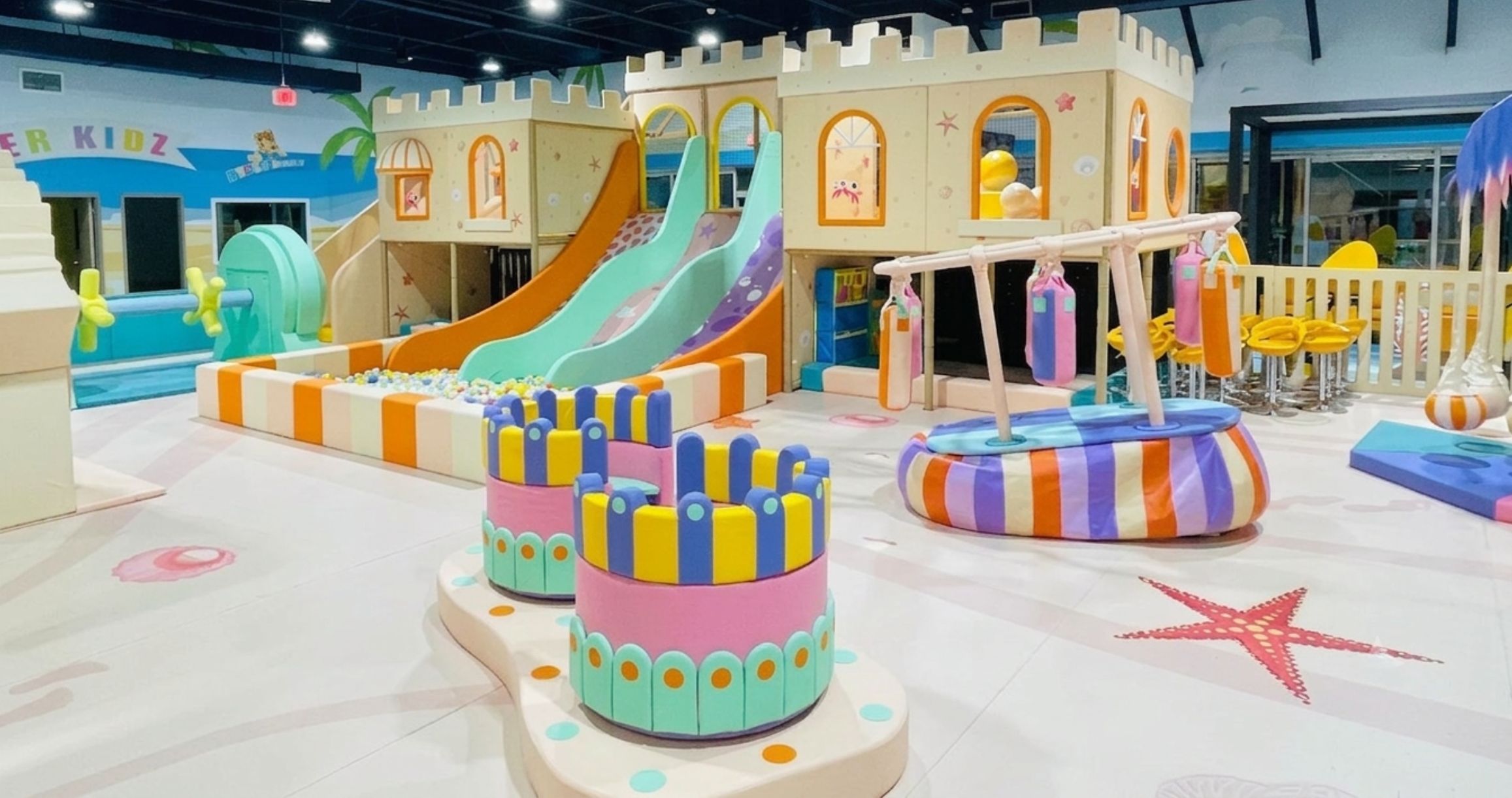
Psychological Foundations of Social Development in Indoor Settings
To truly appreciate why an indoor play environment is so effective, it helps to understand the science behind how children learn to interact. Far from being random, the social learning that happens during play is supported by decades of child development research.
Understanding key developmental theories reassures caregivers of the evidence-based benefits of indoor field trips for fostering preschool social skills.
Here's what's happening beneath the surface during a visit to a kids indoor playground:
Learning by Watching (Bandura's Social Learning Theory)
Albert Bandura's research showed that children learn social behaviors by observing and imitating others. An indoor playground is a dynamic social classroom. A child might see another ask for a turn on the slide, then try it themselves. They observe older children navigating a climbing structure together and learn the basics of cooperation. The contained setting provides countless models of positive social interaction.
Learning with a Little Help (Vygotsky's Sociocultural Theory)
Lev Vygotsky introduced the "Zone of Proximal Development" (ZPD), which is the sweet spot where a child can master a skill with guidance from a peer or adult. In an indoor playground, a slightly more confident child might show another how to climb a small ramp, or a teacher might help two children negotiate sharing a bin of soft blocks. These interactions are powerful learning moments that might not happen as easily in a less structured environment.
Learning to See from Another's View (Theory of Mind)
Pretend play is crucial for developing "theory of mind"—the ability to understand that others have different thoughts and feelings. When children play in a miniature grocery store or kitchen, they take on roles, negotiate rules ("You be the shopper, I'll be the cashier!"), and practice seeing the world from someone else's perspective. This is a direct workout for empathy.
Age-by-Age Social Skill Development in Indoor Field Trips (2-5 Years)
Preschoolers aren't a monolith; their social skills evolve rapidly. A well-designed indoor play space caters to these different stages, allowing every child to grow from their current developmental level. Here's a breakdown of what to expect and encourage during your visit:
Ages 2-3: The Parallel Players
At this stage, children are often engaged in "parallel play"—playing alongside others without direct interaction. This is a vital first step in social development.
- What it looks like: Two toddlers in a soft-play zone, each stacking their own blocks but occasionally glancing to see what the other is doing.
- Skills being built: Observation, becoming comfortable around peers, and early turn-taking (e.g., one child goes down a small slide, then the other follows).
- How indoor play helps: Designated toddler areas provide a safe, non-intimidating space for these first social explorations.
Age 4: The Cooperative Crusaders
This is when cooperative play truly begins to blossom. Children start actively seeking out playmates and creating shared goals.
- What it looks like: A group of children deciding to build a "fort" together in a giant block area or working as a team to carry large soft balls to the top of a structure.
- Skills being built: Negotiation ("Let's put this block here!"), cooperation, role assignment, and comforting peers who might be hesitant or upset.
- How indoor play helps: Multi-person obstacles and large-scale building zones naturally encourage teamwork.
Age 5: The Confident Communicators
By age five, children are refining their ability to communicate, solve problems, and manage their emotions within a group.
- What it looks like: Children verbally resolving a dispute over a play item, creating complex storylines in pretend-play areas, and showing advanced empathy by including a shy child in their game.
- Skills being built: Advanced conflict resolution, leadership, perspective-taking, and emotional regulation.
- How indoor play helps: Interactive games and imaginative zones provide the perfect stage for practicing these sophisticated social scripts in a low-stakes environment.
The "Why Indoor?" Advantage: Safety, Consistency, and Focused Learning
While any form of play is beneficial, indoor field trips offer distinct advantages over other options, especially when the goal is social skill development.
- Controlled and Safe Environment: Safety is paramount. A professional indoor playground eliminates weather concerns, traffic, and other external hazards. This climate-controlled consistency allows children and educators to focus entirely on social interaction without distraction. The environment is built for kids, minimizing risks and maximizing their freedom to explore socially.
- Intentional Design: Unlike a generic park, every structure in a quality indoor playground is designed with a purpose. Separate zones for toddlers and older children ensure age-appropriate challenges, reducing frustration and promoting positive interactions. The layout encourages both independent exploration and group collaboration.
- Year-Round Consistency: Social skills, like any other skill, require consistent practice. Because they are weather-proof, indoor play centers allow for regular, planned outings year-round. This consistency is critical for reinforcing behaviors and making social learning a continuous part of the curriculum.
Making the Most of the Trip: Tips for Parents and Educators
A field trip's success is amplified by a little preparation and follow-through. Empowering children before, during, and after the visit cements the social learning that takes place.
Before You Go
- Talk About It: Discuss what to expect. Talk about sharing, taking turns, and using "kind words" with friends.
- Set a Goal: Frame the trip with a simple social goal, like "Today, let's try to invite one new friend to play with us."
During the Visit
- Observe and Guide: Step back and let children navigate interactions on their own, but be ready to offer gentle guidance if conflicts arise. "It looks like you both want the blue ball. How can we solve this?"
- Model Behavior: Play alongside the children. Ask another child if you can join their game, demonstrating how to enter play politely.
- Praise the Process: Acknowledge effort, not just outcomes. "I loved how you asked for a turn so nicely," is more powerful than, "Good job sharing."
After the Trip
- Reflect and Reinforce: Ask open-ended questions like, "What was your favorite game to play with your friends today?" or "Tell me about a time you helped someone." This helps children process their social experiences and solidifies the learning.
Choosing the Right Indoor Field Trip: What to Look For
Not all indoor play areas are created equal. When your goal is fostering social development, here are the key features to evaluate. This framework can help families looking for an indoor playground Gaithersburg MD, or educators planning kids field trips Rockville.
A clear checklist simplifies selecting indoor field trips aligned with social development goals, reducing decision anxiety for caregivers and educators.
- ✅ Dedicated Age-Based Zones: A clear separation between areas for toddlers and older preschoolers is crucial for safety and ensures activities are developmentally appropriate.
- ✅ Variety of Play Types: Look for a mix of kids activities in Rockville. Are there structures for active physical play, zones for imaginative role-playing, and areas for quieter, collaborative building?
- ✅ High Standards of Safety and Cleanliness: The facility should be visibly clean and well-maintained. Equipment should be in excellent condition, with soft landings and clear safety rules posted.
- ✅ Clear Sightlines and Attentive Staff: Can you easily supervise children from various points in the facility? Is the staff engaged, friendly, and actively monitoring the play areas?
- ✅ Group-Friendly Amenities: For school trips, inquire about private party rooms for snack time, a streamlined check-in process for groups, and staff support to ensure a smooth experience.
Frequently Asked Questions
Q: How do indoor field trips help shy or anxious children?
A: The controlled, predictable environment of an indoor playground is often less overwhelming than a chaotic outdoor park. Children can observe others from a comfortable distance before deciding to join in. The variety of play options allows them to choose activities that match their comfort level, whether it's quiet building or active climbing, providing a gentle on-ramp to social interaction.
Q: My child has trouble sharing. Will a trip like this make it worse?
A: It's actually the perfect practice ground! With an abundance of play options, it's easier to redirect a child to another engaging activity if a conflict arises over a single item. It provides countless low-stakes opportunities for adults to guide them through the process of taking turns and negotiating, which is much harder to do at home with limited toys.
Q: Is this just for fun, or is there real educational value?
A: There is immense educational value. Investing in high-quality, play-based SEL opportunities yields incredible returns, estimated at $11 for every $1 invested in terms of future academic success and well-being. Play is the language of childhood, and it's the most effective way preschoolers learn complex social and emotional skills.
The Best Play is Purposeful Play
Investing in a child's social skills is one of the most important things we can do for their future happiness and success. An indoor field trip offers far more than just a fun day out—it is a purposeful, powerful experience that equips preschoolers with the tools they need to build friendships, solve problems, and navigate their social world with confidence.
At HyperKidz Rockville, we've designed our entire facility to be a vibrant learning lab for social skills. From our multi-level play structures that encourage teamwork to our imaginative zones that spark cooperative storytelling, every visit is an opportunity for growth. We provide a safe, clean, and engaging environment where children can thrive.
Discover how our world-class kids play area near me can support your child's development. If you're an educator, learn more about our seamless and enriching kids field trips Rockville options, designed to be as easy for you as they are fun for your students.